

SourceVane · Practical AI
Prompt-cache break-even: how many prefix reuses cover the write cost?
A source-backed calculation compares one cache write plus cache reads with ordinary input processing for a fixed 10,000-token prefix.
Direct answer
The decision in brief
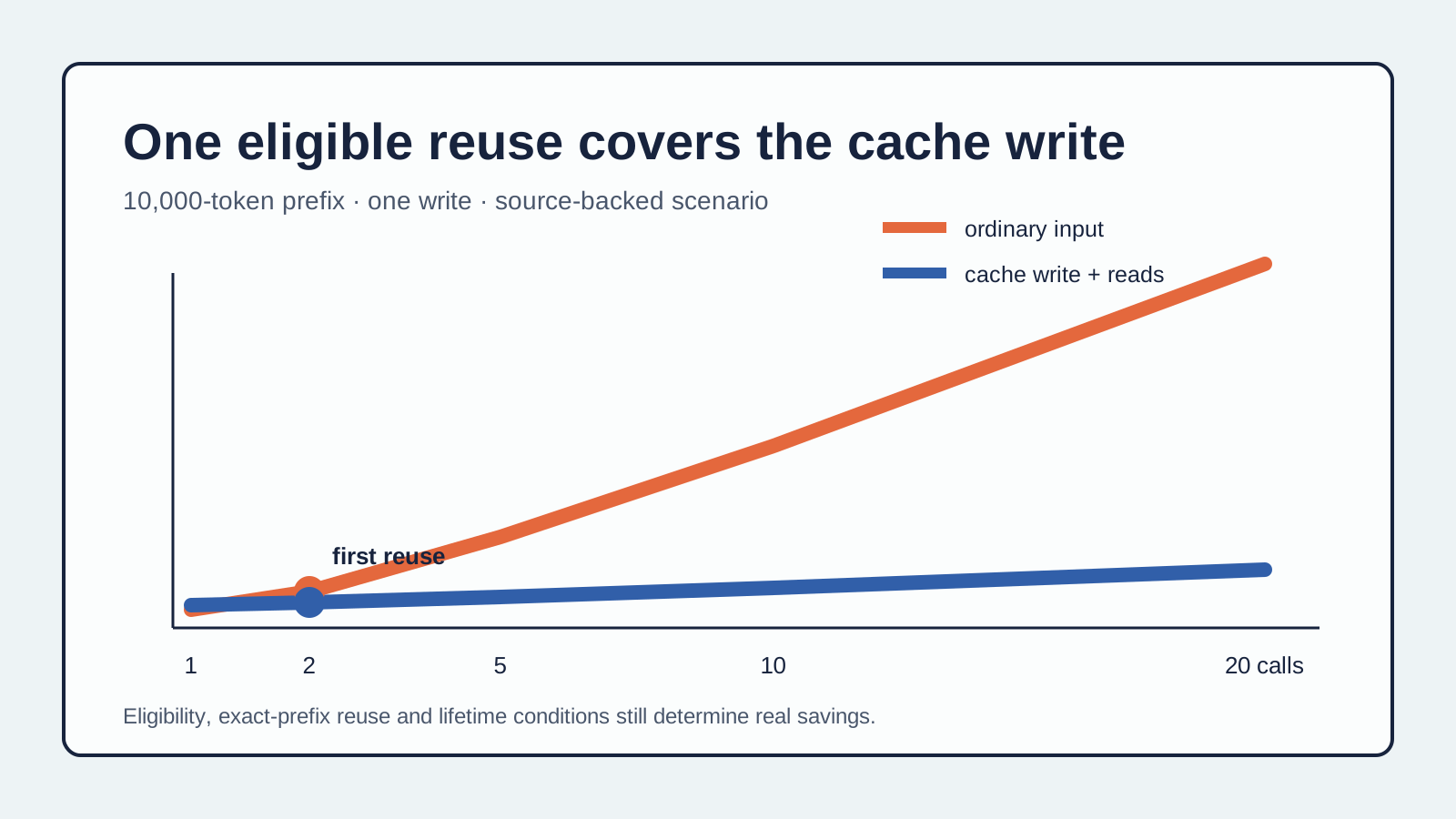
Under the stated Claude Sonnet 5 rates, the first cache read after one write more than covers the higher write cost. The result only applies while the prefix remains eligible and reusable.
Answer
One reuse crosses the stated break-even point
Under the stated Claude Sonnet 5 rates, the first cache read after one write more than covers the higher write cost. The result only applies while the prefix remains eligible and reusable.
Scenario results
| Total calls | Cache writes | Cache reads | Without cache | With cache | Savings |
|---|---|---|---|---|---|
| 1 | 1 | 0 | $0.020 | $0.025 | −$0.005 |
| 2 | 1 | 1 | $0.040 | $0.027 | $0.013 |
| 5 | 1 | 4 | $0.100 | $0.033 | $0.067 |
| 10 | 1 | 9 | $0.200 | $0.043 | $0.157 |
| 20 | 1 | 19 | $0.400 | $0.063 | $0.337 |
At one call, the cache write costs $0.005 more. At two calls, one eligible read produces a $0.013 saving under these assumptions.
Method and evidence
Without cache: N × P × standard input rate. With cache: one P-token write plus (N − 1) eligible P-token reads. Output and non-repeated input are held equal and omitted because they cancel in this comparison.
Sources: Claude pricing for the stated rates; prompt caching documentation for eligibility and lifetime behavior.
Download JSON · Download CSV · Use the caching decision guide
Limits
This combines source analysis with a deterministic scenario calculation. SourceVane did not run paid Claude requests for this study. Real savings depend on eligible prefix reuse within the applicable cache lifetime, model-specific pricing, cache misses, output tokens and any separate storage charge.
Revision and production notes
Study type: scenario analysis source analysis. Revision: 2026-09-13.1. Updated: 2026-09-13.
SourceVane publishes the assumptions, formulas and machine-readable rows so the result can be checked independently. Corrections change the revision and are recorded on the public page.
Continue this decision
Evidence and next steps
Reduce AI API costs without losing useful results
Measure workload, retries and accepted outputs before comparing models, batching or reusable prompts.
AI API pricing comparison
Compare selected first-party text API list prices using the same per-million-token unit, with conditions, verification dates and official sources.
AI API cost calculator
Compare two AI API budgets using token prices, retries and successful tasks. Enter your own assumptions; no API calls or account required.
What happened next · API prices · Decision guides · Latest AI coverage · Follow updates